

Five Reasons to Be Thankful for the U.S.-Mexico Friendship, and a Vision for What Comes Next
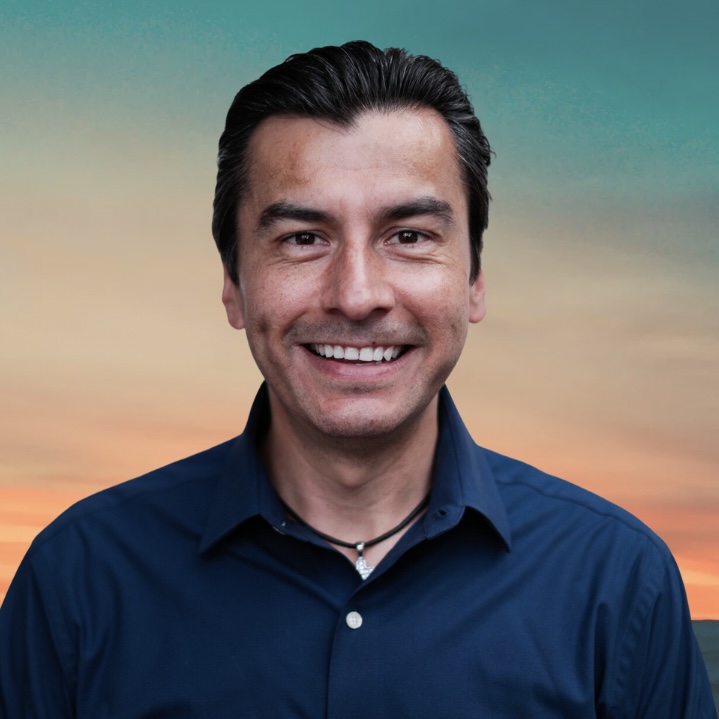

This Thanksgiving, the headlines about the United States and Mexico are full of tension: tariffs, cartels, a trade agreement now reviewed every year. It is easy to forget that our two countries have stood together when it counted, again and again. I grew up in Nogales, where the border runs through families, businesses and friendships. Here are five moments I am thankful for, and a picture of where I believe we should go next.
1. Lincoln and Juárez
In the 1860s, while France occupied Mexico and installed an emperor, the United States refused to recognize him. Once the Civil War ended, Washington pressed France to withdraw, helping Benito Juárez restore the Mexican republic. Two leaders who believed in self-government found common cause, and that friendship still echoes in statues, schools and streets named for both men across our two countries.
2. Allies in World War II
In 1942, after German submarines sank Mexican oil tankers, Mexico declared war on the Axis powers and joined the Allied cause. Mexico's fighter squadron, the Escuadrón 201, flew alongside American forces in the Philippines. Mexican pilots risked their lives for a shared victory, and their service remains a point of pride on both sides of the border.
3. A Mexican Inventor in American Living Rooms
Guillermo González Camarena, a young Mexican engineer, developed an early color television system and patented it in the United States in the 1940s. It is a reminder that innovation has always flowed in both directions, and that Mexican talent has helped shape the technology Americans use every day.
4. Mexico Came to Help After Katrina
In 2005, after Hurricane Katrina devastated the Gulf Coast, a Mexican Army convoy crossed into Texas carrying food, water and medical teams. It was the first time Mexican troops had operated on U.S. soil since the 1840s, and this time they came as friends, to feed and care for Americans in need.
5. Neighbors in Disaster
When earthquakes struck Mexico City in 1985 and again in 2017, American rescue teams flew south to search the rubble. When wildfires tore through Los Angeles in January 2025, Mexican firefighters came north to help. Neighbors show up for each other. That is what we have done, over and over.
Above All, the People
Treaties, trade and history matter. But the heart of this friendship has always been its people.
Roughly 40 million people in the United States trace their roots to Mexico. They are teachers and nurses, soldiers and small business owners, engineers, farmers and elected officials. They build our homes, start our companies and serve in our armed forces. In Mexico, an estimated 1.6 million U.S. citizens have made their homes, more than in any other country in the world, from retirees in Baja to entrepreneurs in Mexico City.
And then there are the families who live their lives across the line every day. In Nogales, where I grew up, it was normal to have breakfast on one side and dinner on the other, to have cousins, godparents and best friends in both countries. For millions of us, the border is not a dividing line. It is the middle of our neighborhood.
Our cultures have woven together in ways we often take for granted. The food on Thanksgiving tables from Texas to California. The music, from mariachi to the artists topping today's charts. Spanish spoken in boardrooms and ballparks. Day of the Dead altars in American schools, and American football filling Estadio Azteca last weekend. Each country is richer because of the other.
This Thanksgiving, I am most thankful for them: the people who prove every day that the United States and Mexico are not just neighbors. We are family.
A Vision for the Next Chapter
Gratitude is not just about looking back. It is a responsibility to protect and build on what we have. So let me describe the relationship I want us to build.
Imagine a North America that makes the semiconductors, clean energy and critical minerals the world depends on, here at home instead of in China. Imagine Phoenix and Guadalajara, San Antonio and Monterrey, working as one continuous innovation corridor. Imagine joint planning on water and climate, because the desert does not stop at the line. And imagine a generation that grows up bilingual and binational, and sees that as an advantage.
None of that is possible without security. The border of the future must be secure and efficient: fast for legitimate trade and travel, and closed to cartels, fentanyl and human trafficking.
Having served at U.S. Customs and Border Protection, I believe the answer is to push the border out. Security should not begin at the line. It should begin deep inside Mexico, at trusted inspection centers where cargo is scanned, sealed and cleared long before a truck reaches the port of entry. The same principle applies to people. The United States already uses preclearance at airports in Canada and Ireland, where travelers clear U.S. customs before they board. We should bring that model to Mexico's major airports and inland hubs, and expand trusted traveler programs like SENTRI and Global Entry, with vetting done before anyone arrives at the border.
When goods and people are vetted early, our officers at the line can focus on the real unknowns. Add joint intelligence against the cartels, technology at every port, and a serious effort to stop the guns and money flowing south, and we get a border that works for those who follow the rules and against those who do not.
Thankful, and Ready to Build
Our two countries have been friends when it counted: in war, in disaster and in discovery. This Thanksgiving, I am grateful for that history. But the best way to honor it is to build what that friendship could become: a safer, stronger and more prosperous North America.
From my family to yours, happy Thanksgiving. Feliz Día de Acción de Gracias.


Comments