

Beneath the border: what the tunnels under Nogales taught me about security
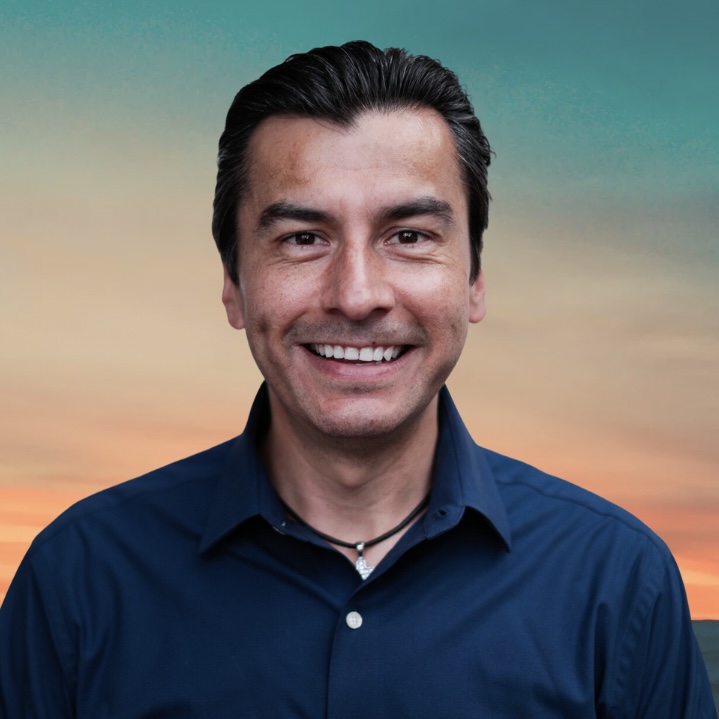
I grew up in Nogales, Arizona, a city that sits on top of the busiest stretch of underground smuggling in America. Most people see our border as a fence, a wall or a port of entry. For those of us who grew up there, the border also runs underneath our streets.
This week, federal prosecutors in San Diego charged a man they call El Ingeniero with material support for terrorism for engineering a tunnel for the Jalisco New Generation Cartel. That case is a good moment to step back and tell the longer story: how cartel tunnels began, why my hometown became their capital, and what I learned, first as mayor and later at U.S. Customs and Border Protection, about what it actually takes to stop them.
The pool table in Agua Prieta
The first known cross border drug tunnel was discovered in May 1990, about an hour east of Nogales. It ran from a home in Agua Prieta, Sonora, to a warehouse in Douglas, Arizona, a few blocks from the port of entry.
It was built for the Sinaloa Cartel and designed by an architect working for Joaquín "El Chapo" Guzmán. The entrance was hidden beneath a pool table. A water faucet outside the house worked as a secret lever that opened a hydraulic trapdoor. It ran roughly 200 to 300 feet and carried cocaine north under the feet of the officers working the crossing.
Investigators later called it the blueprint. El Chapo kept building tunnels for decades, and he eventually escaped a maximum security prison in Mexico through one. The lesson the cartels learned in 1990 was simple: if you cannot get through the border, go under it.
Why Nogales became the tunnel capital
Ambos Nogales, the two cities that share our name, also share something few border towns have: a storm drainage system built in the 1930s as a joint project between the United States and Mexico. Monsoon water runs downhill from Sonora into Arizona through large concrete channels, some big enough to drive a truck through.
Smugglers figured out early that those channels were a ready made highway. When Border Patrol installed steel gates and welded manholes shut, they started digging short tunnels that punched into the drainage walls from homes and businesses on both sides.
The numbers tell the story. Border Patrol counts about 127 tunnels discovered in the Nogales area since 1990, more than half of all the tunnels found along the entire southwest border. There is a reason officers call it the tunnel capital of the border.
What we did as a city
When I was mayor, tunnels were not a headline. They were a public works problem and a public safety problem at the same time.
Our Nogales police officers worked side by side with Border Patrol to find them, and when a tunnel was found, the city had to fill it and seal it. Some were crude holes barely wide enough to crawl through. Others were shored with timber and wired for lights. Every one of them threatened the streets, the homes and the businesses above it.
And here is the part every border mayor understands: for every tunnel we closed, another crew was already digging somewhere else. Filling holes was necessary. It was never enough.
From shovels to rail lines
Over thirty years, the tunnels changed. The early ones in Nogales were short and hand dug, built to reach the drainage system. In California, where the soil is softer, cartels began building long engineered passages with ventilation, electricity, lighting and rail carts that could move tons of product.
Along the California border, tunnels began to stretch the length of several football fields, ending inside warehouses that looked like ordinary businesses.
The engineering got better because the money got bigger. A tunnel is an investment. If it moves product for even a few weeks before it is found, it can pay for itself many times over.
The El Ingeniero case
That brings us to this week. According to prosecutors, Luis Manuel Hernández Victoria, known as El Ingeniero, oversaw a tunnel of about 1,933 feet running from Tijuana to a supposed retail store near the Otay Mesa port of entry, outside San Diego. It had reinforced walls, rail, ventilation and electricity. Mexican news reports say he was arrested in Jalisco in mid October, and a federal grand jury returned the indictment on October 29.
What is new is the charge. Because the United States designated CJNG and other major cartels as terrorist organizations, prosecutors could charge the man who engineered the tunnel with material support for terrorism, not just drug trafficking. That changes the risk for everyone in the supply chain of a tunnel: the engineers, the financiers and the people who rent the buildings.
What real security takes
Later in my career I served as Chief of Staff at U.S. Customs and Border Protection, an agency with about 60,000 people and a $13 billion budget. That job gave me a national view of the same problem I knew from the streets of Nogales, and it confirmed the lesson I learned as mayor: you cannot fill your way to security.
It takes three things working together.
First, detection technology. Tunnels are found faster when sensors, ground radar and intelligence tools tell officers where to look, instead of waiting for a sinkhole or a tip.
Second, binational cooperation. The tunnel starts in Mexico and ends in the United States, so neither country can solve it alone.
Third, prosecutions that reach the top. Arresting the diggers changes nothing. Charging the engineers and the financiers, as this case does, raises the cost of building the next one.
The tunnels under my hometown are a reminder that border security is not one wall or one agency. It is a system, built by people who live in these communities and understand them. I grew up above those tunnels. I have spent my career trying to make sure the next generation in Nogales does not have to.
This post expands on The Border Buzz section of this week's Power Courier newsletter. Read the full edition and subscribe now to get it every Monday.



I appreciate educational content that makes public information easier for ordinary people to understand. Government schemes often involve specific conditions and procedures, so a straightforward explanation delhi lakshmi yojana online apply can be a useful first step for interested readers. Clear headings and concise answers help people locate the information they need. It would be beneficial to include reminders about checking official sources before acting on any information. This encourages responsible research and helps readers avoid relying on inaccurate online claims.